In large industrial plants you will often see tall hyperbolic towers or rows of neatly arranged square cooling units; these are cooling towers. Around them, pumps, piping, treatment equipment and basins form a complex water circulation network known as the circulating water system.
The two systems complement each other and are inseparable. The circulating water system transports, treats and distributes the cooling medium, much like the human circulatory system, while the cooling tower is the critical terminal for heat dissipation, like the skin of the human body, releasing excess heat into the atmosphere.
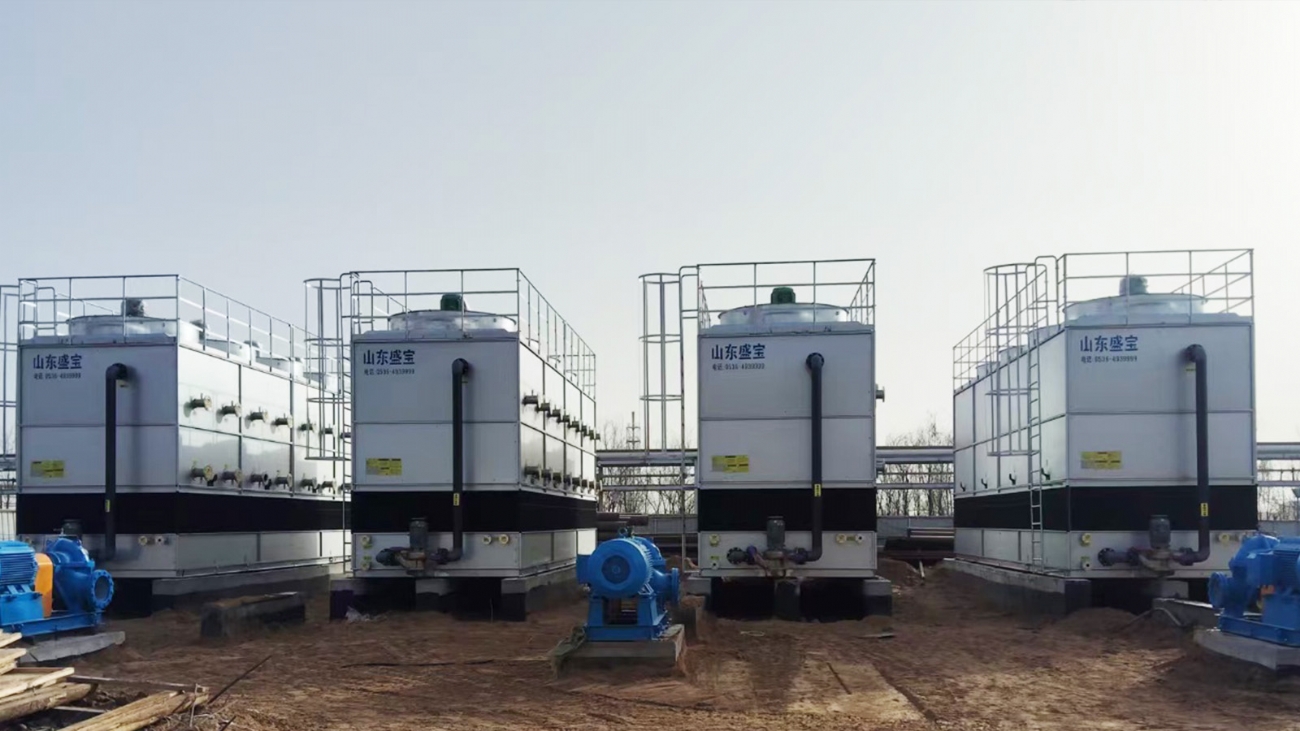
01 System Overview: From Concept to Real-World Application
An industrial cooling system works like the air conditioning of a large plant, and its core task is to remove continuously the excess heat generated during production. Within this system the circulating water system and the cooling tower play different but closely related roles.
A circulating water cooling system consists of several key components, including the cooling tower installed at a designated location, the circulating water pump, various valves, filters, an electronic descaling device and the refrigeration unit.
These components are connected by carefully designed piping to form a water circulation network. In recent years this type of system has been applied more and more widely in actual projects.
In the construction of the Shiziyang Channel project, the team introduced a circulating water cooling system to control the temperature of large-scale concrete pours. By embedding cooling water pipes and using an automatic monitoring system, they effectively prevented harmful cracking.
02 Circulating Water System: The Blood Circulatory System of Industrial Cooling
The circulating water system is the core part of an industrial cooling system and provides continuous cooling service for the production process. In an open circulating cooling water system the cooling water is recirculated, and the cooling tower is the key facility that cools the water.
The system mainly comprises the circulating water pump and basin, circulating water piping, cooling structures and the heat exchangers in the production equipment. As the key facility, the cooling structure falls mainly into two categories: cooling ponds and cooling towers.
Depending on how water and air come into contact, circulating water cooling is usually divided into closed and open systems. Of these, the open circulating water system is the most widely used and the most varied type of cooling system.
In such a system the cooling water dissipates heat through evaporation, so that most of the hot water is cooled and then recirculated.
During operation, a circulating water cooling treatment system requires particular attention to scale control, corrosion control and fouling control.
This calls for comprehensive water quality management and maintenance through measures such as reducing carbonate hardness in the circulating water, dosing scale inhibitors and using corrosion inhibitors to form a protective film.
03 Cooling Towers: The Heat-Dissipating Skin of Heat Exchange
The cooling tower is the core equipment that transfers heat to the atmosphere in a circulating water cooling system. Cooling water heated by heat exchange in the production process is brought into direct contact with air inside the tower and cooled by evaporation and conduction.
The working principle of a cooling tower is based on heat exchange between water and air. Inside the tower both water and air pass through the fill, which greatly enlarges the contact area and thereby makes heat dissipation possible.
Cooling towers come in many types. By cooling process they are mainly divided into wet and dry types. Wet cooling towers dissipate heat mainly through evaporation, while dry cooling towers rely mainly on conduction and convection.
Natural draft cooling towers generate airflow from the density difference between the air inside and outside the tower, and usually need a very tall stack to produce sufficient draft. Mechanical draft cooling towers, by contrast, force air movement with fans, so they are relatively small in size but consume electricity.
04 Working in Coordination: Achieving Heat Dissipation Together
The coordinated operation of the circulating water system and the cooling tower follows a set procedure. The normal start-up sequence is: electric valves first, then the cooling tower, cooling water pump and refrigeration unit, and then the chilled water pump. The shutdown sequence is exactly the reverse.
Because a cooling tower serves the refrigeration unit, it should be located as close as possible to that equipment to keep the cooling water piping short. The ideal installation location is a ventilated spot on the downwind side of the prevailing wind direction of the building, which makes operation and management easier and reduces environmental impact.
In actual operation, cooling water pumps above 30 kW usually use soft starting, with several pumps running in parallel and variable frequency control where applicable, so that pump power can be adjusted to the ambient climate for better energy savings.
Using two-speed motors on cooling tower fans and adjusting the fan blade angle properly also brings clear benefits in energy saving and noise reduction.
05 Energy Saving and Consumption Reduction: The Art of Balancing Efficiency and Cost
Energy saving and consumption reduction are a major concern in both the design and the operation of circulating water systems and cooling towers. In an open circulating water system, part of the water is lost to evaporation as it passes through the cooling tower; this is both a necessary heat dissipation process and the main source of water loss.
To reduce water loss, modern cooling towers are fitted with drift eliminators that keep circulating water loss within an extremely low range, achieving a remarkable water saving effect.
In terms of energy consumption, cooling tower fans and water pumps are the main power consumers. Optimized design, for example using large-diameter fans to reduce speed, selecting the pump head sensibly and adopting automatic control systems, can significantly cut system energy consumption.
Fan-less cooling towers are an emerging technology in which a fluid kinetic energy conversion device replaces the conventional fan, offering advantages in energy saving, water saving, noise reduction and easy maintenance.
06 Practical Application and Maintenance Strategies
Circulating water systems and cooling towers play a vital role in industrial production. The main functions of a cooling water station are to supply cooling water that keeps industrial production running normally and to remove the waste heat generated by equipment.
In large-capacity industrial facilities such as thermal power plants, cooling tower circulating water supply systems are commonly used. Depending on the ventilation method, such systems are divided into natural draft cooling towers and mechanical draft cooling towers.
Effective operation of a cooling tower depends on sound management. Water management is an important part of cooling tower operation and covers the various water loss paths such as evaporation, blowdown, drift and splash-out.
In winter operation, the combination of low ambient temperature and airflow can cause icing, which may damage the fill, air inlet louvers and tower structure. Proper operating strategies, such as maintaining a constant strong water flow at the air inlet, help prevent icing problems.
Turn on a tap and hot water flows out instantly; the power company keeps supplying electricity and the plant runs day and night. Behind these everyday comforts, the cooling system built from the circulating water system and the cooling tower is running silently.
From towering cooling towers to the network of circulating water pipes underground, this system has long since become part of every corner of modern industry.
In power plants it keeps generating units delivering electricity; in factories it keeps production lines running steadily. Through scorching summers and harsh winters alike, the system keeps working, transferring heat from industrial production to the atmosphere and maintaining the normal rhythm of industrial society.








 Home
 Products
 Phone