In industrial cooling systems, the mist eliminating closed circuit cooling tower has become a core piece of equipment for pursuing the "dual carbon" goals and reducing operation and maintenance costs, thanks to its dual technical features of closed-loop circulation and mist eliminating recovery. Compared with conventional open cooling towers and ordinary closed cooling towers, its advantages in energy and water savings are especially pronounced, and it suits high energy-consuming applications in power generation, chemicals, metallurgy, biomass power generation and many other industries. The following sections explain the technology in detail, starting from its principles and supported by measured data.
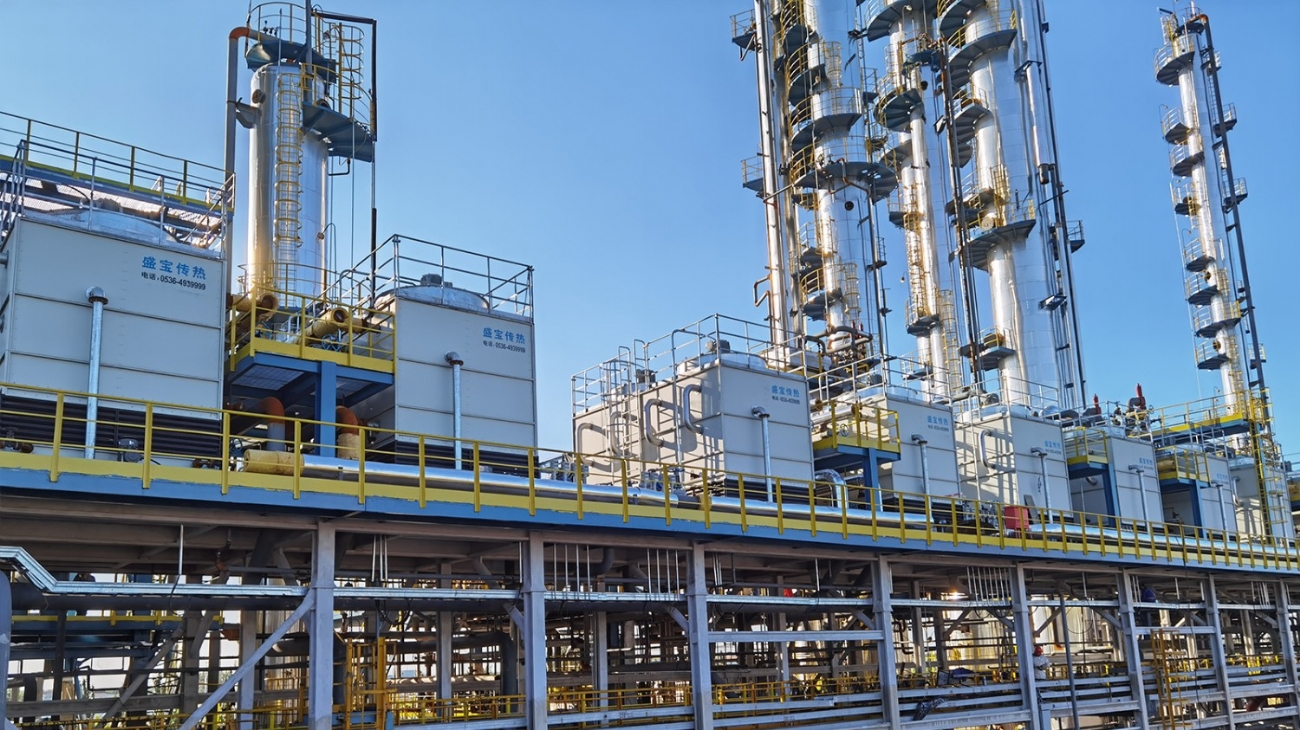
1. Water Saving Advantages: Controlling Loss at the Source and Recycling Water Resources
1. Closed Structure Greatly Reduces Evaporation Loss
Conventional open cooling towers exchange heat by bringing spray water into direct contact with air, so evaporative water loss accounts for a very high share of consumption. A mist eliminating closed circuit cooling tower, by contrast, adopts a sealed coil design in which the cooling medium circulates inside a closed coil and exchanges heat with air only indirectly, through spray water on the outside of the tubes, structurally isolating the cooling medium from direct contact with outside air. Measured data show that its evaporation loss is only 1/3-1/2 that of a conventional open cooling tower, with an annual water saving rate of over 30% and an evaporation loss rate held below 0.5%. For a single 100 t unit, annual water savings can exceed 3000 t; for a chemical plant handling 1000 t per day, this means more than 100,000 yuan less in water bills every year.
2. Mist Eliminating Recovery Enables Secondary Use of Water
The integrated mist eliminating system is the core upgrade that delivers water savings. Using condensation recovery technology, it captures the water vapour evaporated during spraying and turns it back into liquid water that returns to the circulating system, eliminating industrial white plume completely while further improving water resource efficiency. The technology recovers more than 90% of the evaporated moisture, lowers air humidity and prevents corrosive substances in the mist from attacking nearby equipment, indirectly reducing the water waste and maintenance losses caused by equipment corrosion. It is particularly well suited to regions with water shortages and to industrial parks with strict environmental requirements.
3. Lower Makeup Water and Water Treatment Costs
The closed circulation mode keeps external impurities out of the cooling system, greatly reducing the risk of water contamination and the frequency of water changes caused by deteriorating water quality. At the same time, the circulating water quality stays stable, so water treatment chemicals do not need to be dosed frequently. This cuts chemical consumption costs and avoids the environmental burden of discharging chemical-laden wastewater, creating a closed-loop advantage of water saving, consumption reduction and environmental protection.
2. Energy Saving Advantages: Intelligent Control and Heat Exchange Cut Whole-Life Energy Use
1. Intelligent Temperature Control and Dual-Mode Operation Optimize the Energy Structure
Mist eliminating closed cooling towers generally integrate an intelligent control system with a variable frequency drive module that dynamically adjusts fan speed and spray water volume according to ambient temperature and cooling load, and automatically switches between the dual cooling modes of air cooling and spraying, avoiding the energy waste caused by conventional equipment running at constant power. With intelligent algorithms optimizing the operating strategy, overall energy consumption is 15%-20% lower than that of a conventional closed cooling tower, and motor power can be kept within a more reasonable range: for a unit with a cooling water flow rate of 300 m³/h, motor power is no more than 7.5 kW, reaching national grade 1 energy efficiency, and annual electricity savings in industrial applications can exceed 100,000 kWh.
2. Heat Exchange Design Improves Energy Efficiency
By optimizing the coil structure and heat exchange area, with some models increasing heat exchange area by 20%, and combining this with an optimized air flow design, the equipment greatly improves heat exchange efficiency and reaches its cooling target at lower energy consumption. At the same time, closed circulation avoids large fluctuations in the temperature of the cooling medium and reduces the extra energy consumed by downstream production equipment when temperatures are unstable, an advantage that is even more pronounced under high temperature conditions. In addition, the equipment uses aluminium alloy fans, damping pads and other quiet-structure components, with operating noise of no more than 55 dB that can drop below 50 dB in night mode, so no additional noise control equipment is needed and the associated energy use is indirectly reduced.
3. Less Energy Lost to Equipment Operation and Maintenance
The closed structure greatly reduces the risk of internal scaling and corrosion, extends the service life of core components such as the coils and fans, and reduces the production energy losses caused by equipment failure and downtime. Maintenance is also far less frequent than with conventional cooling towers, with no need for frequent fill cleaning or parts replacement, and the maintenance process itself consumes little energy, further lowering energy costs across the whole life cycle.
3. Overall Advantages: Aligned with Industrial Trends, Balancing Environmental Protection and Returns
Driven by the "dual carbon" goals and the circular economy policy, mist eliminating closed circuit cooling towers combine water saving, energy saving and environmental protection in a single solution. They resolve the familiar pain points of conventional cooling towers, such as white plume pollution, water waste and high energy consumption, while delivering clear economic returns. Their application range is wide: whether for small and medium-sized projects or large industrial units, customized design can meet any cooling requirement. Especially in energy-intensive industries such as power generation, chemicals and metallurgy, they have become the mainstream alternative to conventional cooling equipment, providing core support for the green operation of industrial systems.








 Home
 Products
 Phone