In industrial production such as chemicals, fine chemicals and pharmaceutical synthesis, the reactor is a core piece of production equipment. Polymerization, esterification, nitration and similar chemical reactions are all strongly exothermic, and a loss of temperature control very easily increases side reactions, reduces product purity and even leads to safety hazards such as overpressure and runaway polymerization. The cooling system is the key to safe, continuous reactor operation and better product quality. With their highly adaptable performance advantages, fiberglass cooling towers have become the mainstream choice of equipment for reactor cooling and are widely used on industrial production lines of all kinds.
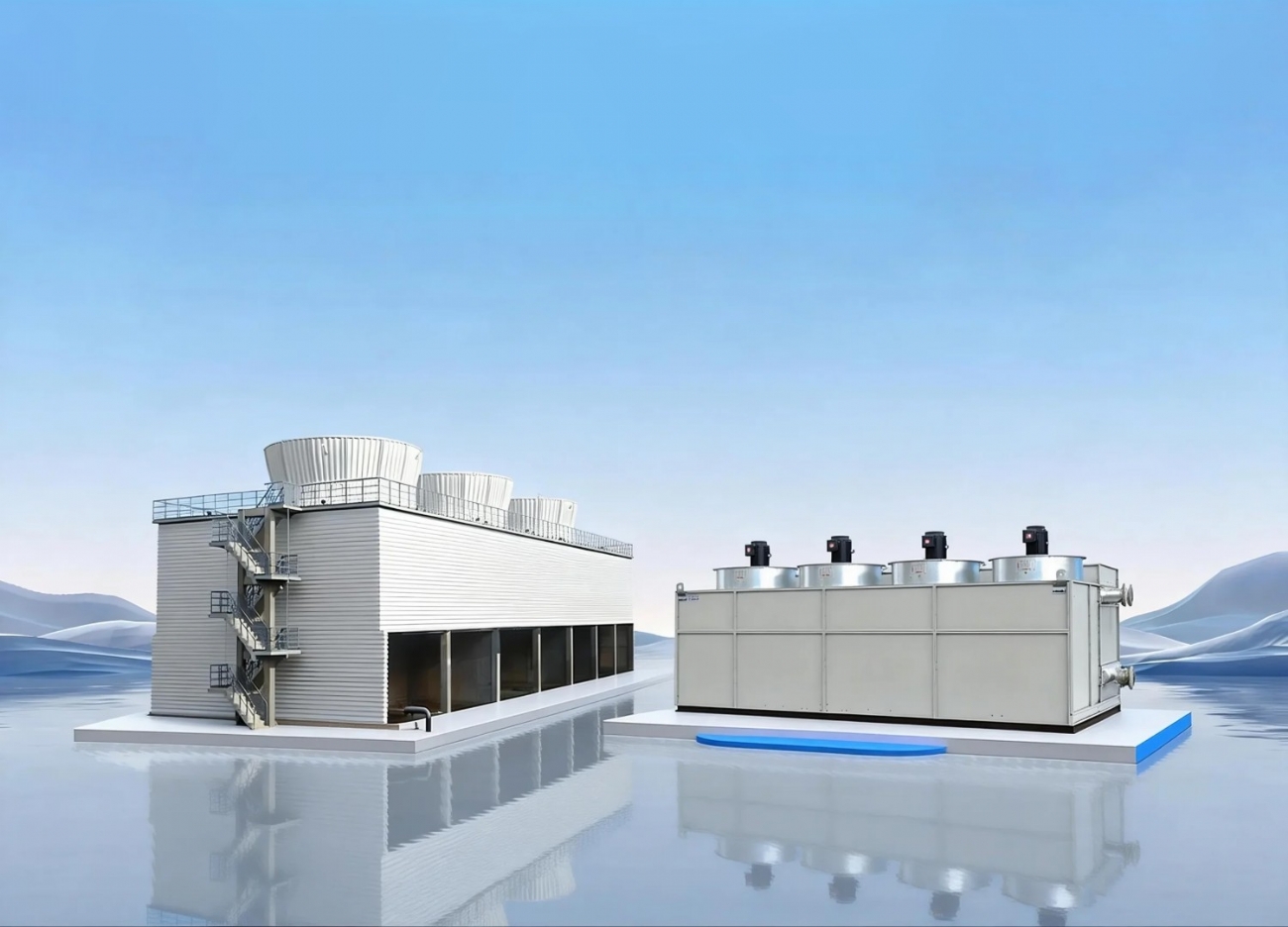
As the core equipment of a reactor cooling system, the fiberglass cooling tower works on the principle of circulating water heat exchange, continuously carrying away the waste heat generated in the reactor jacket and coils and rapidly cooling the circulating water, thereby providing a constant temperature environment for the chemical reactions inside the vessel. Compared with conventional metal cooling towers, it suits the complex conditions of chemical production and tolerates demanding environments such as acid and alkali mist, organic solvent corrosion and high-temperature circulating water. It resolves the industry pain points of metal equipment, which rusts, corrodes and leaks easily, and meets the cooling requirements of most continuous reactor operations.
Adapting to multiple operating conditions is the core strength of fiberglass cooling towers. The equipment runs steadily whether it is handling the micro-scale temperature control of fine chemicals, the continuous cooling of bulk chemical raw materials in high-volume production, or the clean temperature control required for pharmaceutical synthesis. It holds fluctuations in reaction temperature in check, effectively avoiding reaction runaway caused by excessive heat and poor reaction efficiency caused by excessive cold, significantly improving raw material utilization and the finished product pass rate, and laying a solid foundation for stable output and better quality.
Its material advantage greatly reduces enterprise operation and maintenance costs. Fiberglass cooling towers are integrally molded from high-strength glass fiber and unsaturated polyester resin, giving them excellent resistance to acids, alkalis, aging and corrosion. They work reliably across the range from pH 0 to 14 and eliminate the failures of corrosion perforation and water leakage. The equipment is also light yet strong, easy to transport and install, structurally solid and highly resistant to wind loads and deformation, so it rarely suffers damage in long-term outdoor operation. Its service life can reach more than 15 years, far superior to that of conventional iron or stainless steel cooling towers.
Energy efficiency and simple maintenance make it the equipment of choice for industrial cooling. Fitted with heat exchange fill and low-noise energy-saving fans, the tower delivers high heat transfer efficiency, uniform heat dissipation and stable cooling, meeting the needs of 24-hour uninterrupted reactor production. It runs with low energy consumption and low noise and produces no dust and no secondary pollution, in line with standards for environmentally sound production. Its simple structure resists scaling and blockage, so day-to-day upkeep involves nothing complicated, greatly reducing the frequency of shutdowns for inspection and lowering labor and spare parts costs.
With deep roots in industrial cooling, we specialize in customized fiberglass cooling tower solutions. Based on reactor volume, reaction heat release parameters and plant conditions, we can customize cooling equipment of different specifications, whether closed or open, to suit any chemical production line. With proven equipment performance, stable cooling and extremely low operation and maintenance costs, we help enterprises achieve safe production, lower energy costs, better quality and higher efficiency, and we are the ideal supporting choice for reactor cooling systems.








 Home
 Products
 Phone